On Waiting: What the In-Between Times Teach Us
Waiting for results, for a reply, for life to begin. We treat waiting as wasted time, but the in-between seasons may have something to teach us. A reflection.
4 min read
In this article8 sections · showhide
So much of life is spent waiting.
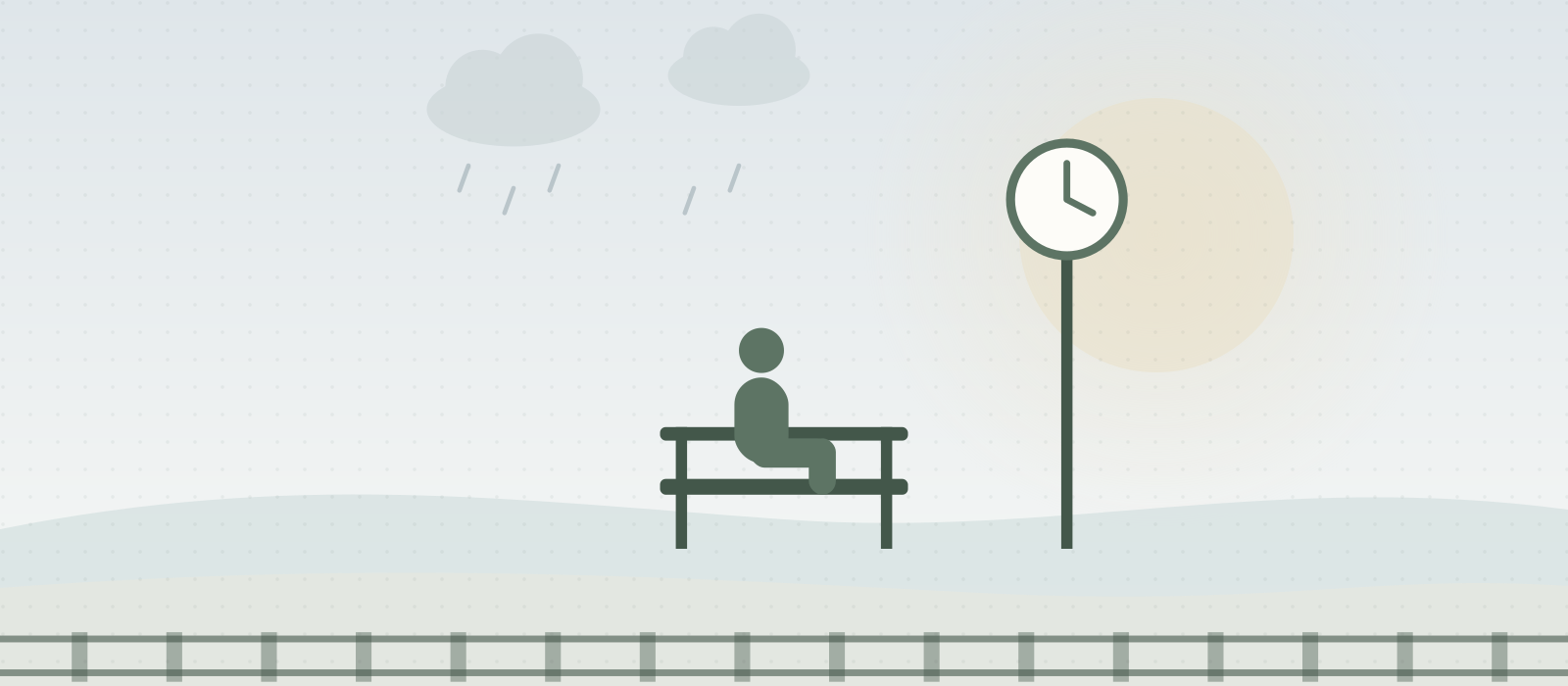
Waiting for exam results. Waiting for a call after an interview. Waiting in a hospital corridor. Waiting for a train that’s forty minutes late. Waiting for the rain to stop, the fever to break, the right person to arrive, the next chapter of life to begin.
We rarely think of waiting as part of life. We think of it as the gap between the parts that count. Something to fill, endure or scroll through until the real thing starts.
But what if the waiting is also the real thing?
The discomfort of not knowing
The hardest part of waiting is usually not the time itself. It’s the uncertainty. We don’t know how it will turn out, and the mind hates not knowing. So it fills the gap with stories, mostly worried ones.
Psychologists have long noticed that many people find uncertainty harder than bad news. When we know what we’re facing, we can start to adapt. When we don’t, the mind keeps running every possibility.
Perhaps that’s why waiting feels so tiring, even when we’re sitting still. We’re not resting. We’re rehearsing futures that may never happen.
What waiting reveals
Waiting has a way of showing us what we care about. Nobody waits anxiously for something that doesn’t matter. The intensity of our waiting is a measure of our hopes.
It also shows us how much we want to control things. In the waiting room there is usually nothing left to do. The application is sent. The test is done. The words have been said. What remains is the part that was never ours to decide.
That can feel frightening. It can also, sometimes, feel like a strange kind of permission to put the weight down for a while.
What if the waiting is also the real thing?
The farmer’s patience
In many parts of India, farmers sow their seeds and then wait for the monsoon. They prepare the fields as well as they can, and then they look at the sky. There is nothing more to do but tend what’s in front of them and wait.
There’s something worth learning in that rhythm. Effort, then patience. Doing our part fully, then accepting that growth happens in its own time, mostly out of sight.
The Bhagavad Gita speaks of acting without clinging to the fruits of action. Waiting may be where that teaching is tested most. It’s easy to talk about letting go of outcomes when nothing is at stake. It’s harder in the corridor outside the doctor’s room.
Living inside the in-between
What would it mean to actually live during waiting, rather than just get through it?
Perhaps it means noticing that, while we wait, life is still happening. The tea is still warm. The person beside us is still there. The sky is still changing colour. The waiting doesn’t stop the world, though it often stops us from seeing it.
Perhaps it means letting the waiting be uncomfortable, without making it worse with too many imagined futures. Saying, honestly, “I don’t know how this will go,” and letting that sentence be enough.
And perhaps it means remembering that every season of our lives once had a waiting time before it. The job we now have, the friend we now love, the home we now live in: each of them was once an unknown we were waiting for.
Some questions to sit with
- What are you waiting for right now?
- What part of it is still in your hands, and what part has already left them?
- What is happening around you today that the waiting might be making you miss?
Frequently asked questions
How can I cope with anxious waiting, like waiting for medical results?
Keep your days simple and structured, stay close to people who support you, and limit how often you search for information online, which often increases worry. If the anxiety becomes overwhelming, speaking to a doctor or counsellor can help. In India, the free Tele-MANAS helpline is available on 14416.
Is patience something you’re born with?
Partly temperament, but largely practice. Each small wait we handle calmly makes the next one a little easier.
A small step for today
The next time you’re waiting, in a queue, for a message or for a kettle to boil, try not reaching for your phone. Just wait. Notice what you feel, and what’s around you. It might be the most ordinary minute of your day, and one of the few you’re fully present for.
Sources and further reading
- Bhagavad Gita, chapter 2, verse 47 (on action without attachment to its fruits).
- Carleton, R. N. (2016). Into the unknown: A review and synthesis of contemporary models involving uncertainty. Journal of Anxiety Disorders, 39, 30–43.
Found this helpful? Share it with someone who needs it.
🕯️ Reading path: When life feels hard3 of 4
 Up nextMan’s Search for Meaning: Five Lessons from Viktor Frankl’s Book
This article is for general information and is not a substitute for professional advice. If you’re struggling, please reach out to a qualified professional or, in India, call the free Tele-MANAS mental health helpline on 14416. See our Disclaimer.
Keep reading
Reflections
On Rest: Why You Don’t Have to Earn a Pause
Many of us only allow ourselves to rest once everything is done, which means we rarely rest at all. A reflection on why rest is not a reward, and what it might look like to take it without guilt.
5 min read

Spirituality
Who Am I? A Beginner’s Guide to Self-Inquiry
Ramana Maharshi’s practice of self-inquiry asks one simple question: who am I? Here’s what it means, where it comes from in Vedanta, and how to try it for five minutes a day.
4 min read
Spirituality
Mindful Eating: How to Slow Down and Actually Taste Your Food
Eating in front of a screen, we barely notice our meals. Mindful eating brings back enjoyment, awareness of hunger and fullness, and a calmer relationship with food.
5 min read