The Spotlight Effect: People Notice You Far Less Than You Think
Sure everyone saw your mistake? Research shows we hugely overestimate how much others notice us. Here’s how to use that to feel lighter and braver.
5 min read

In this article8 sections · showhide
You trip slightly on the stairs at the office. You mix up a word in a presentation. You realise, halfway through a family function, that there’s a small stain on your kurta. In that moment it feels like every eye in the room is on you.
Here’s the comforting truth: most people didn’t notice. And the few who did have probably forgotten already.
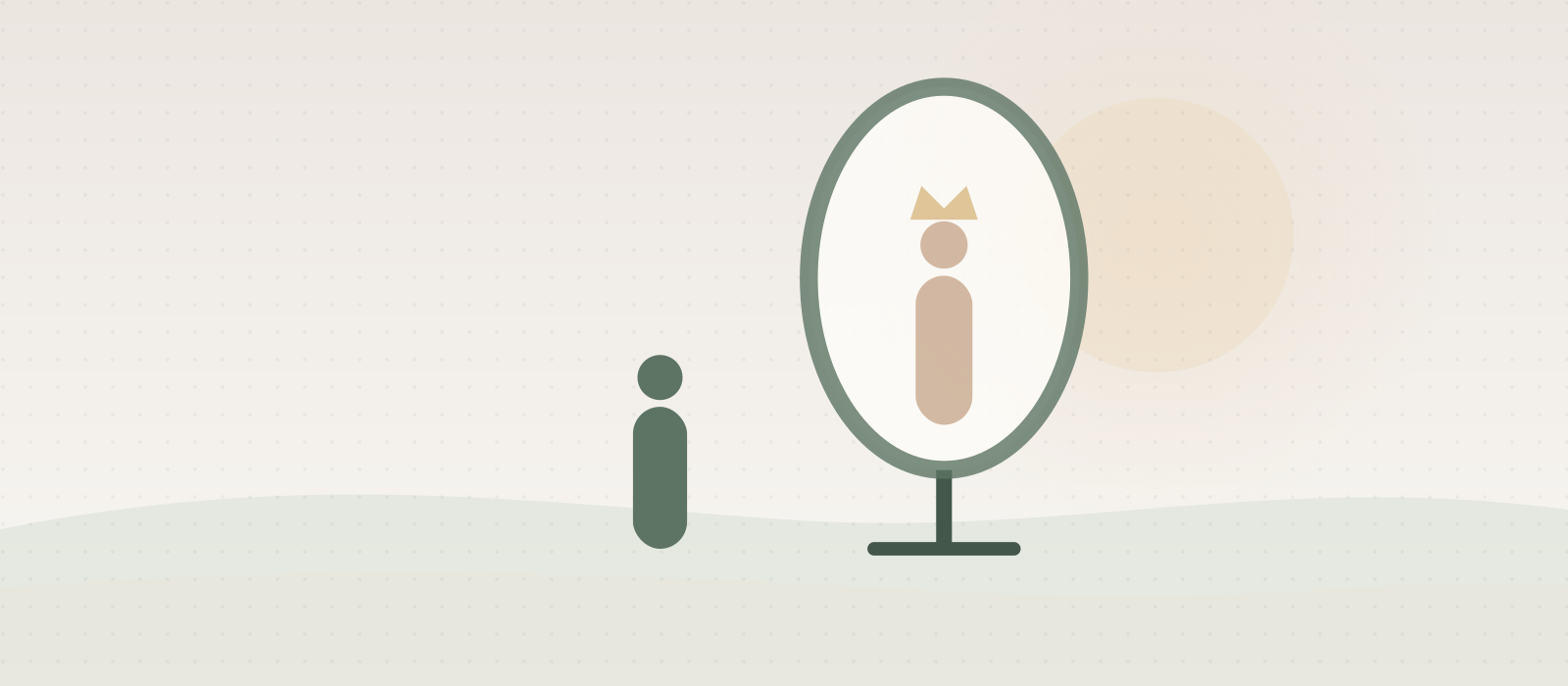
Psychologists call this the spotlight effect: the feeling that a bright light follows us around, showing every flaw and slip to the world. Knowing about it won’t make you fearless overnight, but it can take a surprising amount of pressure off.
The famous T-shirt experiment
In a well-known study published in 2000, psychologist Thomas Gilovich and his colleagues Victoria Medvec and Kenneth Savitsky asked university students to put on a T-shirt with a large picture of the singer Barry Manilow (at the time, about the least cool thing a student could wear) and walk into a room full of other students.
Afterwards, the T-shirt wearers were asked to guess how many people had noticed the shirt. They estimated about half. In reality, only around a quarter had. The wearers were so focused on themselves that they assumed everyone else was focused on them too.
The same team found something similar about our inner feelings. In what they called the illusion of transparency, people believed their nervousness was far more visible to others than it really was. That racing heart during a speech? The audience mostly can’t see it.
Why we feel so watched
We experience our own lives from the inside, in full detail, every second. We know exactly how nervous we felt, which word we fumbled and how long the pause was. It’s hard to step outside that view and remember that everyone else is busy living their own lives in just as much detail.
Everyone around you is, in a sense, the main character of their own story, worrying about their own hair, their own slides and their own awkward moments. You are usually a background character in their day, just as they are in yours. That isn’t sad; it’s freeing.
You are usually a background character in their day, just as they are in yours.
How the spotlight effect quietly holds us back
Feeling constantly watched makes us cautious in ways we don’t need to be:
- Not asking a question in class or at work in case it sounds silly.
- Avoiding the gym, a dance class or a new hobby because beginners might be judged.
- Replaying an embarrassing moment from years ago that nobody else remembers.
- Spending a lot of time and money on small details of appearance that others rarely notice.
- Staying quiet in group chats or meetings, even when we have something useful to say.
Over time, these small retreats add up to a smaller life than we actually want.
Five ways to turn down the spotlight
1. Flip the question
Ask yourself: “Do I remember what my colleague wore last Tuesday?” or “Do I remember who mispronounced a word in last week’s meeting?” If you don’t, they probably don’t remember yours either.
2. Point your attention outward
In social situations, focus on the other person: what they’re saying, what they might be feeling, what you could ask next. It eases self-consciousness, and as a bonus, it makes you better company.
3. Run a tiny experiment
Do something mildly outside your comfort zone. Ask the first question in a meeting, wear the bright colour you like, or order in a language you’re still learning. Then notice how little reaction there really is. Real evidence beats imagined judgement.
4. Use the 5-5-5 test
Will this matter in five days? Five months? Five years? Most embarrassing moments don’t survive the first five days, except in our own heads.
5. Talk to yourself like a friend
If a friend told you they’d stumbled over a word in a presentation, you wouldn’t call them a failure. You’d probably laugh kindly and say no one noticed. Offer yourself the same grace.
Common mistakes to avoid
- Thinking no one ever notices anything. People do notice some things, and that’s fine. The point is that they notice far less, and judge far less harshly, than we fear.
- Using it as a reason to stop caring. You can still care about how you show up. The aim is to stop being frozen by imagined scrutiny.
- Waiting to feel confident first. Confidence usually follows action, not the other way round.
Frequently asked questions
Is the spotlight effect the same as social anxiety?
No. The spotlight effect is a normal, everyday bias that almost everyone experiences. Social anxiety is more intense and long-lasting, and can make daily life very hard. If fear of judgement is stopping you from working, studying or seeing people, it’s worth talking to a professional.
Why do I remember my embarrassing moments for years?
Strong emotions, such as embarrassment, help memories stick. Your brain flags them as important, even when they weren’t. Other people didn’t feel that emotion, so they didn’t store the moment the same way.
Does the spotlight effect work for good things too?
Yes. We also tend to overestimate how much others notice our successes or a great outfit. People are simply busy with their own lives.
The freedom on the other side
There’s something quietly liberating about realising you are not under constant inspection. It means you have far more room to try, to fail, to learn and to be yourself than your inner critic suggests. The spotlight is mostly in your own head, and you are allowed to dim it.
Sources and further reading
- Gilovich, T., Medvec, V. H., & Savitsky, K. (2000). The spotlight effect in social judgment. Journal of Personality and Social Psychology.
- Gilovich, T., Savitsky, K., & Medvec, V. H. (1998). The illusion of transparency. Journal of Personality and Social Psychology.
Found this helpful? Share it with someone who needs it.
🪞 Reading path: Know yourself2 of 4
 Up nextSelf-Deception: The Stories We Tell Ourselves
This article is for general information and is not a substitute for professional advice. If you’re struggling, please reach out to a qualified professional or, in India, call the free Tele-MANAS mental health helpline on 14416. See our Disclaimer.
Keep reading
Human Nature
Why Rejection Hurts So Much: The Human Need to Belong
An unanswered message or being left out of a plan can sting far more than seems reasonable. Psychology explains why: we are built to belong. Here’s what that means and how to meet rejection more gently.
5 min read

Human Nature
Comparison: Why We Measure Ourselves Against Others (and How to Stop)
A friend’s promotion, a cousin’s new house, a stranger’s holiday photos. Comparing ourselves is deeply human, but it can quietly steal our peace. Here’s why we do it and how to do it less.
4 min read

Reflections
The Courage to Be a Beginner Again
As adults, we rarely let ourselves be bad at something. Learning an instrument, a language or a sport at 35 or 60 takes a particular kind of courage. A reflection on beginnings, ego and growth.
4 min read