How to Protect Your Attention in a Distracted World
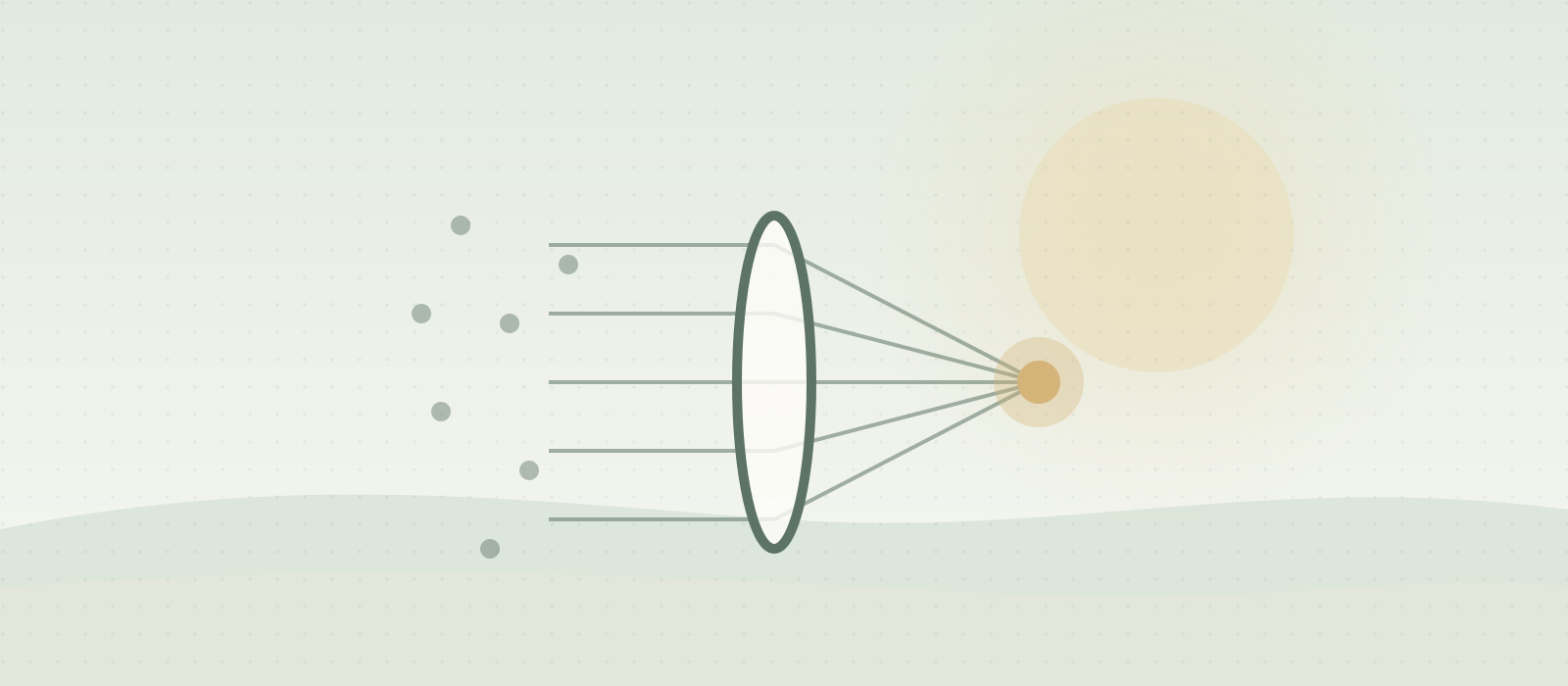
Your attention is the raw material of your life, and everything wants a piece of it. Here’s what research says about interruptions and phones, and simple ways to get your focus back.
5 min read
In this article8 sections · showhide
You sit down to write an important email. A notification pops up, so you check it. While you’re there, you reply to a message, glance at the news, watch half a video. Fifteen minutes later you return to the email and can’t remember what you meant to say.
If this sounds familiar, you’re not lacking discipline. You’re living in a world designed to capture your attention, and attention is a limited resource. The philosopher and psychologist William James wrote in 1890: “My experience is what I agree to attend to.” In other words, what you pay attention to, moment by moment, becomes your life.
What interruptions really cost
Interruptions feel small, but research suggests they add up.
- In a 2008 study, Gloria Mark and colleagues at the University of California, Irvine found that people who were interrupted often finished their tasks just as fast, but reported more stress, frustration and time pressure. They were working faster to make up for the breaks.
- Organisational researcher Sophie Leroy described a related effect she called attention residue. When we switch from Task A to Task B, part of our mind stays stuck on A, so we perform B less well. The more unfinished Task A feels, the stronger the residue.
The cost isn’t only the minutes lost. It’s the quality of attention afterwards.
The phone in the room
Even a silent phone can be distracting. In a 2017 study, Adrian Ward and colleagues asked people to complete memory and reasoning tasks with their phones either on the desk, in a pocket or bag, or in another room. Those whose phones were in another room tended to perform best.
Later attempts to replicate this “brain drain” effect have had mixed results, so it’s best treated as a hint rather than a firm law. But many people find the practical lesson matches their experience: out of sight is easier to ignore than out of reach.
“My experience is what I agree to attend to.”
Five ways to protect your attention
1. Give your phone a home
Choose a place where your phone lives while you focus: a drawer, a shelf, another room. Not face down on the desk. The extra distance makes checking it a choice rather than a reflex.
2. Batch the small stuff
Instead of answering messages as they arrive, set two or three times a day for messages and email. Most things that feel urgent can wait an hour.
3. Close the loop before switching
To reduce attention residue, before you switch tasks, write one line about where you’ve left off: “Next: add figures to section 2.” Your mind relaxes when it knows the task is safely parked.
4. Work in focused blocks
Try 25 to 50 minutes on a single task, then a short break. Close every tab and window you don’t need. The aim isn’t to work longer, but to work without splitting your mind.
5. Turn off almost all notifications
Go through your phone settings and keep notifications only for real people who might need you urgently, such as calls and messages from family. Everything else can be checked when you choose.
Attention is also about rest
Focus isn’t just about blocking distractions. A tired mind wanders more. Sleep, short walks and moments of doing nothing at all help attention recover. A walk without your phone may do more for your next hour of work than another cup of coffee.
Common mistakes
- Relying on willpower alone. If the phone is next to you, you’ll be fighting it all day. Change the environment instead.
- Trying to fix everything at once. Pick one change, such as the phone’s new home, and keep it for a week.
- Feeling guilty about distraction. Apps are built by large teams to be hard to put down. Struggling with them is normal. The fix is design, not shame.
Frequently asked questions
Is multitasking ever a good idea?
For simple, automatic tasks, such as folding laundry while listening to music, it’s fine. For tasks that need thinking, switching back and forth usually makes both slower and worse.
How long does it take to rebuild focus?
Many people notice a difference within a week or two of reducing notifications and keeping the phone out of reach. Like any habit, it strengthens with practice.
What about social media?
You don’t have to quit. Try using it on a computer instead of a phone, or at set times, so it fits into your day rather than interrupting it.
A small step for today
For your next important task, put your phone in another room, close every tab you don’t need, and set a timer for 25 minutes. Before you start, write down the one thing you want to finish. Then notice how different it feels to give one thing your full attention.
Sources and further reading
- James, W. (1890). The Principles of Psychology. Henry Holt.
- Mark, G., Gudith, D., & Klocke, U. (2008). The cost of interrupted work: More speed and stress. Proceedings of CHI 2008, 107–110.
- Leroy, S. (2009). Why is it so hard to do my work? The challenge of attention residue when switching between work tasks. Organizational Behavior and Human Decision Processes, 109(2), 168–181.
- Ward, A. F., Duke, K., Gneezy, A., & Bos, M. W. (2017). Brain drain: The mere presence of one’s own smartphone reduces available cognitive capacity. Journal of the Association for Consumer Research, 2(2), 140–154.
- Newport, C. (2016). Deep Work: Rules for Focused Success in a Distracted World. Grand Central.
Found this helpful? Share it with someone who needs it.
🌱 Reading path: Build better habits4 of 5
 Up nextHow to Read a Book Slowly: A Simple Method for Remembering What You Read
Keep reading
Discipline
If-Then Plans: The Simple Trick That Helps You Follow Through
Good intentions often fade by Wednesday. Psychologists have found that a tiny change, deciding exactly when and where you’ll act, makes follow-through far more likely. Here’s how to use if-then plans.
5 min read
Discipline
The Two-Minute Rule: A Simple, Kind Way to Beat Procrastination
Big tasks feel heavy, so we put them off. The two-minute rule makes starting so easy you can’t say no, and starting is usually the hardest part.
5 min read
Discipline
How Long Does It Really Take to Build a Habit? (Hint: Not 21 Days)
The “21 days to form a habit” rule is a myth. Research suggests it often takes around two months, and missing a day won’t ruin your progress. Here’s how to make habits stick.
5 min read