The Two-Minute Rule: A Simple, Kind Way to Beat Procrastination
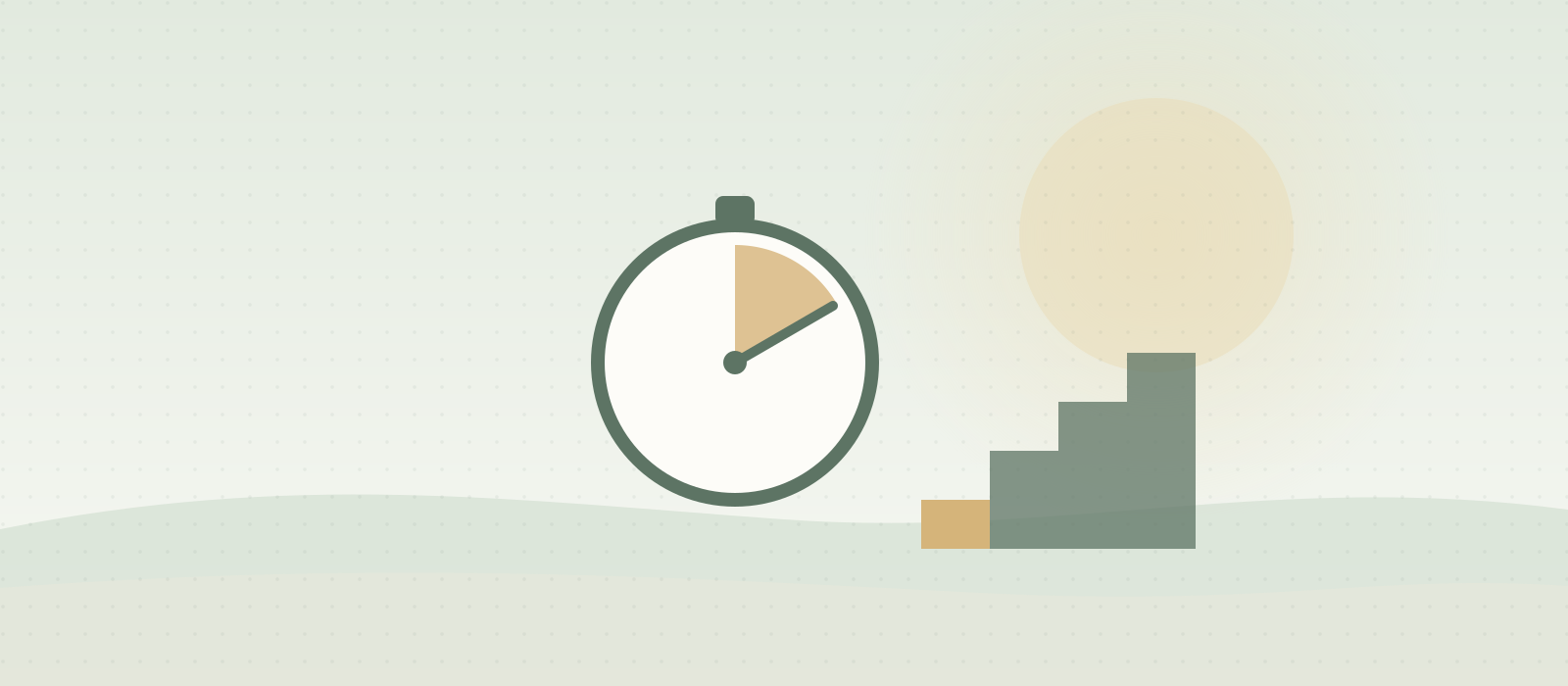
Big tasks feel heavy, so we put them off. The two-minute rule makes starting so easy you can’t say no, and starting is usually the hardest part.
5 min read
In this article9 sections · showhide
You know you should start that report. Or clean the cupboard, reply to the important email, or finally sort out the bills. Instead, you check your phone. Then you make a cup of tea. Then you check your phone again. Suddenly it’s evening, the task is still waiting, and now you feel guilty too.
If this sounds familiar, you’re in very good company. And here’s something that might surprise you: procrastination usually isn’t about laziness or poor time management. It’s mostly about feelings.
Why we really procrastinate
Researchers Fuschia Sirois and Timothy Pychyl, who have spent years studying procrastination, describe it as a way of managing our mood in the short term. When a task makes us feel bored, confused, anxious or afraid of doing it badly, putting it off brings instant relief. The trouble is, the relief doesn’t last, and the task (plus the guilt) grows heavier.
So the key isn’t forcing yourself through with more willpower. It’s making the task feel less threatening, so that starting becomes easy. That’s exactly what the two-minute rule does.
The two versions of the rule
Version one: if it takes two minutes, do it now
This version comes from productivity expert David Allen, in his book Getting Things Done. If a task will take less than two minutes, such as replying to a quick message, filing a document, or washing a single cup, do it right away instead of adding it to a list. Small jobs are surprisingly draining when they pile up in your mind.
Version two: shrink any new habit to two minutes
The second version, popularised by writer James Clear, applies to bigger goals. Scale the task or habit down to something that takes two minutes or less to start.
- “Read more books” becomes “read one page.”
- “Do yoga” becomes “roll out the yoga mat.”
- “Write the report” becomes “open the document and write the title.”
- “Clean the house” becomes “clear the dining table.”
The key isn’t forcing yourself through with more willpower. It’s making the task feel less threatening.
Why such a tiny step works
Two minutes is so small that your brain doesn’t treat it as a threat. There’s nothing to dread. And once you’ve started, something interesting often happens: momentum takes over. “Just two minutes” quietly becomes ten or twenty.
Psychologists have long noticed that unfinished tasks tend to stay on our minds. Once you’ve begun something, your brain often wants to keep going. Even on days when you do stop after two minutes, you’ve proven something valuable to yourself: you’re the kind of person who shows up. That makes tomorrow easier.
How to use it today
Pick one task you’ve been avoiding and write down its very first two-minute step. Be specific.
- Finances: write down this month’s three biggest expenses.
- Fitness: put on your walking shoes and step outside the front door.
- Learning a language: open the app and do one exercise.
- A difficult email: write just the first sentence.
- Decluttering: choose one drawer and remove three things.
Then set a timer for two minutes and begin. When the timer goes off, you’re allowed to stop. Often you won’t want to.
Be kind to yourself, it actually helps
It’s tempting to scold ourselves for procrastinating, but research suggests that makes things worse. In a study by Michael Wohl, Timothy Pychyl and Shannon Bennett, students who forgave themselves for procrastinating before their first exam procrastinated less when studying for the next one. Self-compassion reduced the bad feelings around the task, which made it easier to start.
So instead of “Why am I so useless?”, try: “Okay, I put this off. That’s human. What’s the two-minute version I can do right now?”
Common mistakes to avoid
- Hiding in tiny tasks. It’s easy to fill a whole day with two-minute jobs as a clever way to avoid the one important task. Do the two-minute start of the big thing first.
- Stopping at the start forever. The rule is a launch pad, not a full plan. Once you’ve started, schedule proper time for the rest.
- Waiting to feel ready. You rarely feel ready before you begin. The feeling of readiness usually comes after you start.
Frequently asked questions
Does the two-minute rule work for big projects?
Yes, as a way to begin. Break the project into small steps and use the rule to start each one. Big projects are really just many small steps in a row.
What if I still can’t start, even for two minutes?
Make it even smaller: just open the file, or just put the papers on the table. It also helps to notice what feeling is making the task hard. Is it fear, boredom or confusion? Naming it can take away some of its power.
Is procrastination ever a sign of something more?
Sometimes. Constant procrastination can be linked to stress, low mood, burnout or attention difficulties such as ADHD. If it’s seriously affecting your work, studies or wellbeing, it’s worth talking to a professional.
A small beginning
Somewhere on your list is a task that’s been quietly weighing on you. You don’t have to finish it today. You only have to give it two minutes. Start the timer, and see what happens.
Sources and further reading
- Allen, D. (2001). Getting Things Done. Viking.
- Clear, J. (2018). Atomic Habits. Avery.
- Sirois, F., & Pychyl, T. (2013). Procrastination and the priority of short-term mood regulation. Social and Personality Psychology Compass.
- Wohl, M. J. A., Pychyl, T. A., & Bennett, S. H. (2010). I forgive myself, now I can study. Personality and Individual Differences.
Found this helpful? Share it with someone who needs it.
🌱 Reading path: Build better habits1 of 5
 Up nextHow Long Does It Really Take to Build a Habit? (Hint: Not 21 Days)
Keep reading
Discipline
If-Then Plans: The Simple Trick That Helps You Follow Through
Good intentions often fade by Wednesday. Psychologists have found that a tiny change, deciding exactly when and where you’ll act, makes follow-through far more likely. Here’s how to use if-then plans.
5 min read
Discipline
How to Protect Your Attention in a Distracted World
Your attention is the raw material of your life, and everything wants a piece of it. Here’s what research says about interruptions and phones, and simple ways to get your focus back.
5 min read
Discipline
Delayed Gratification: What the Marshmallow Test Really Tells Us
The famous marshmallow test is often used to say that self-control decides your future. The full story is more interesting, and more useful. Here’s what the research shows and how to practise waiting.
5 min read