Starting Over: How to Begin Again After Failure or Loss
A lost job, a broken relationship, a plan that didn’t work out. Starting over is hard, but it is also one of the most human things we do. Here’s a gentle, practical way through it.
5 min read
In this article7 sections · showhide
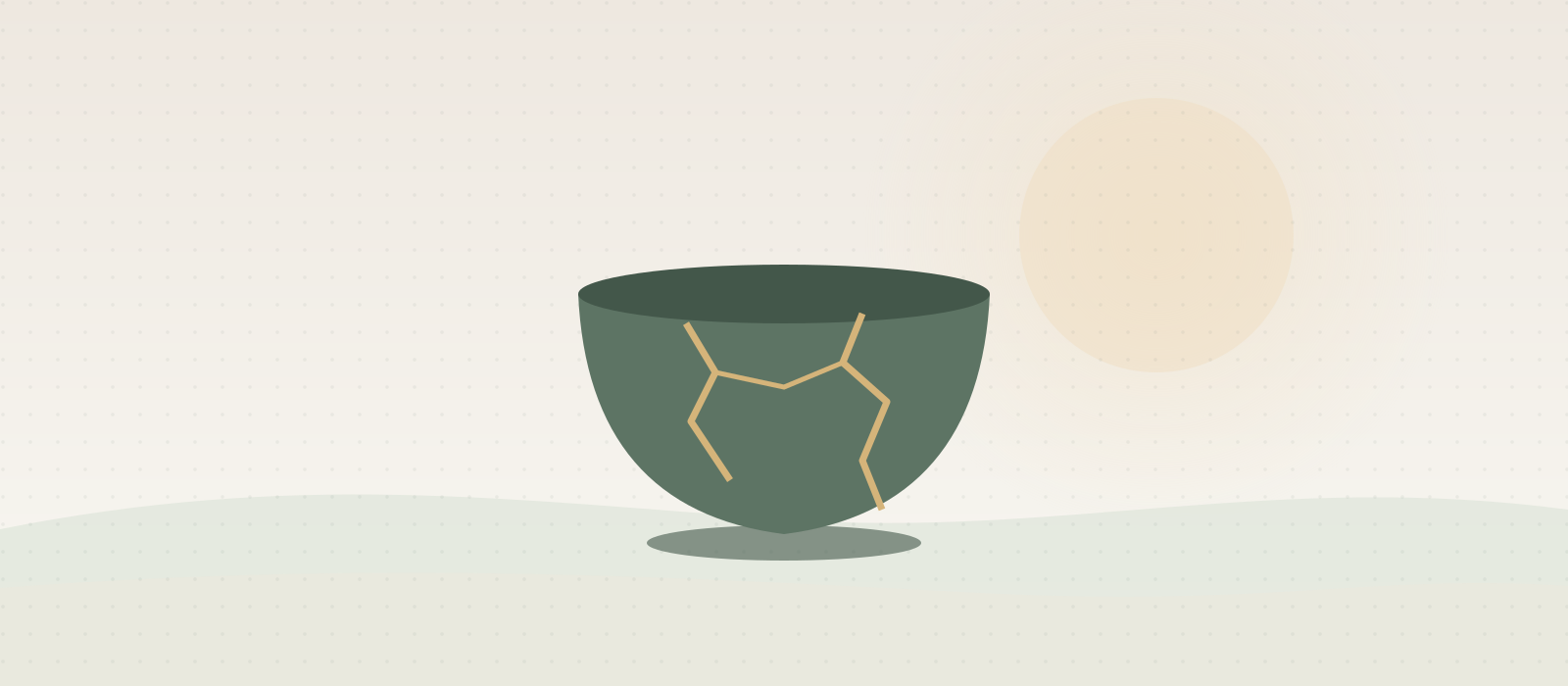
There’s a Japanese craft called kintsugi, in which a broken bowl is repaired with lacquer mixed with gold. The cracks aren’t hidden. They become the most beautiful part of the bowl.
It’s a lovely image, and it’s easy to admire from a distance. It’s much harder when the broken thing is your own life: a business that closed, a marriage that ended, an exam you failed, a move that didn’t work out. In those moments, “beginning again” can feel less like gold and more like rubble.
This article is about that harder, in-between place, and how people actually find their way through it.
Endings come before beginnings
The writer and consultant William Bridges, who studied how people cope with big life changes, made a useful distinction. A change is the event: the job ends, the relationship is over. A transition is the slower inner process of adjusting to it.
He described transitions in three stages:
- An ending, where we let go of the old situation and the identity that came with it.
- A “neutral zone”, a confusing middle period where the old way is gone but the new one isn’t clear yet.
- A new beginning, where fresh energy and direction slowly return.
Most of us want to skip straight from the ending to the new beginning. But the middle stage is not wasted time. It’s where you sort out what you really want next.
People are more resilient than they expect
When something goes badly wrong, it’s natural to imagine we’ll feel this way forever. The research is more hopeful.
The psychologist George Bonanno, who has studied how people respond to loss and hardship for decades, found that resilience is surprisingly common. Many people go through real grief or disappointment and still keep functioning, and most recover more than they expected to.
Some people even describe what researchers Richard Tedeschi and Lawrence Calhoun called post-traumatic growth: after a very hard time, they report a deeper appreciation of life, closer relationships, or a clearer sense of what matters. That isn’t guaranteed, and nobody should be pressured to find a “silver lining”. But it’s a reminder that a painful chapter is not the whole story.
“I failed” and “I am a failure” are very different sentences.
Practical steps for beginning again
1. Name what you’ve lost
Losses come in layers. Losing a job might also mean losing a routine, colleagues, status and a sense of security. Writing the layers down helps you understand why it hurts as much as it does, and it makes the feeling easier to carry.
2. Separate the event from your worth
“I failed” and “I am a failure” are very different sentences. The first is about something that happened. The second is a verdict on who you are. Try catching the second kind of sentence and rewriting it as the first.
3. Keep a few anchors
When much has changed, keep some things steady: a regular wake-up time, a daily walk, a weekly call with a friend. Small routines give the mind somewhere to rest while bigger decisions take shape.
4. Take one small step, then another
You don’t need a five-year plan. Ask: “What is one useful thing I can do this week?” Update your CV. Call one person in the field you’re curious about. Clear one shelf. Momentum usually follows action, not the other way round.
5. Learn without punishing yourself
Looking back honestly helps: what was in your control, what wasn’t, what you’d do differently. But give the review a time limit. Reflection is useful; replaying the same scene every night is not.
What not to do
- Rushing to replace what you lost before you’ve understood what happened. A rebound job or relationship can repeat the same pattern.
- Comparing your timeline with others’. Some people bounce back in weeks, others take a year or more. Both are normal.
- Going it alone. Starting over is easier with people around you. Let at least one person know how you’re really doing.
Frequently asked questions
How long does it take to start over?
There’s no fixed timeline. Small losses may take weeks to adjust to; major ones, such as divorce or bereavement, often take a year or more. Progress is rarely a straight line, and having bad days doesn’t mean you’re going backwards.
What if I don’t know what I want next?
That’s very common, and it’s what Bridges’ “neutral zone” is for. Try small experiments: a short course, a conversation, a weekend project. Clarity often comes from doing, not from thinking alone.
When should I get professional support?
If you feel hopeless, can’t sleep or eat properly, or can’t manage daily life for more than a couple of weeks, please speak to a doctor or counsellor. In India, you can call the free Tele-MANAS helpline on 14416.
A small step for today
Write down one sentence that begins “What I’ve lost is…” and one that begins “One small thing I can do this week is…”. That’s enough for today. Beginnings are usually made of small, unremarkable steps, taken one after another.
Sources and further reading
- Bridges, W. (1980). Transitions: Making Sense of Life’s Changes. Addison-Wesley.
- Bonanno, G. A. (2009). The Other Side of Sadness: What the New Science of Bereavement Tells Us About Life After Loss. Basic Books.
- Tedeschi, R. G., & Calhoun, L. G. (2004). Posttraumatic growth: Conceptual foundations and empirical evidence. Psychological Inquiry, 15(1), 1–18.
Found this helpful? Share it with someone who needs it.
🕯️ Reading path: When life feels hard1 of 4
 Up nextSolitude vs Loneliness: Why Being Alone Isn’t the Same as Feeling Alone
This article is for general information and is not a substitute for professional advice. If you’re struggling, please reach out to a qualified professional or, in India, call the free Tele-MANAS mental health helpline on 14416. See our Disclaimer.
Keep reading
Life
Why Making Friends Gets Harder as an Adult (and What Actually Helps)
At school, friendship seemed to happen by itself. As adults, work, family and distance get in the way. Here’s why adult friendship is harder, and the small, steady habits that keep it alive.
5 min read
Life
Healthy Boundaries: How to Say No Without Feeling Guilty
Boundaries aren’t walls. They’re honest guidelines for how you want to be treated. Learn what healthy boundaries look like and how to set them kindly.
5 min read
Life
Active Listening: The Simple Skill That Makes People Feel Truly Heard
Most of us listen in order to reply. Active listening means listening to understand, and it can transform friendships, families and work relationships.
4 min read